

The way people dress for work underwent a seismic shift almost overnight. When office buildings closed and kitchen tables, spare bedrooms, and living room couches became the new corporate headquarters, daily wardrobes transformed entirely. Sweatpants, leggings, and comfortable knitwear replaced tailored trousers, stiff button-downs, and structured blazers. Yet, even as professional comfort took center stage, a curious trend emerged on the other side of the webcam. Professionals everywhere discovered that while their lower half could remain entirely invisible to colleagues, their upper half still needed to communicate authority, creativity, and polish.
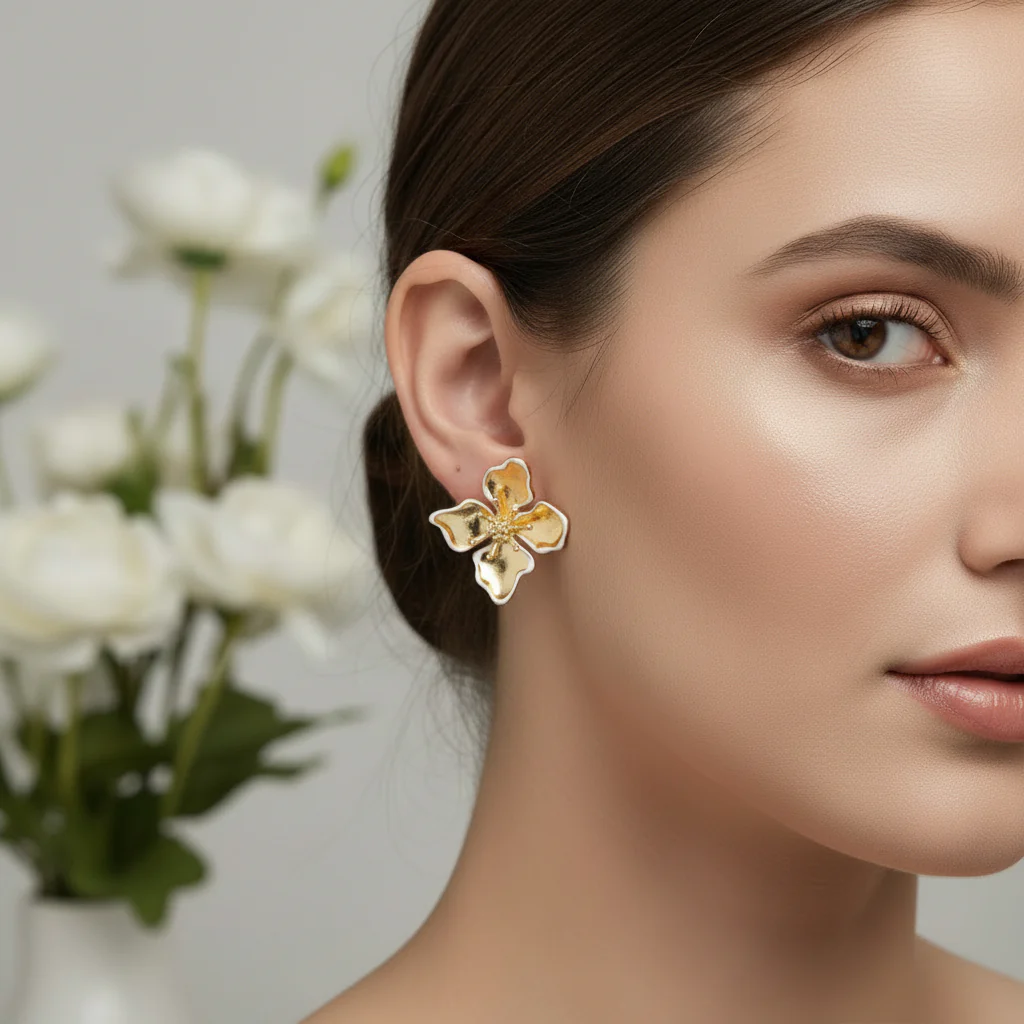
Enter the statement earring. This bold accessory transitioned rapidly from a weekend luxury into the ultimate corporate lifeline for the digital age. As millions adjusted to the rhythms of video conferencing, these oversized, eye-catching pieces filled a very specific psychological and aesthetic void. They proved that looking professional did not require sacrificing personal comfort, redefining how people present themselves in professional virtual spaces.
The Video Conferencing Phenomenon
Virtual meeting platforms fundamentally altered the landscape of personal presentation. When interacting primarily through a glowing rectangular screen, the visual field narrows drastically. Traditional head-to-toe styling matters far less than what is visible from the shoulders up.
The Framing Effect
Camera lenses naturally draw focus directly to the face and the immediate surrounding area. Because the lower body is entirely cut off from view, standard professional signals like shoes, belts, and skirts lose all of their communication power. The collarbone and ears become the primary real estate for visual expression during a virtual call. Statement earrings seize this framing effect instantly, commanding attention without requiring any additional effort.
Combatting Video Fatigue
Staring at grids of faces for hours on end creates a phenomenon known as video fatigue, where the brain works overtime to process non-verbal cues through a screen. Bold, sculptural, or brightly colored earrings introduce a welcome element of visual stimulation. They break up the monotony of plain blouses or basic t-shirts, injecting personality and life into a digital environment that can otherwise feel flat and sterile.
Psychology of Virtual Styling
Dressing for work is never just about physical comfort; it heavily influences mental state and professional confidence. The psychological shift of transitioning into work mode often relies on physical rituals, and jewelry plays a surprisingly powerful role in this process.
-
The Enclothed Cognition Boost: Psychologists have long studied how clothing alters behavior and cognitive performance, a concept known as enclothed cognition. Slipping on a striking pair of earrings acts as a mental trigger, signaling to the brain that it is time to switch from relaxation mode to professional productivity.
-
Boosting Self-Perception: Catching a glimpse of oneself in the corner of a video screen can either drain confidence or boost it. Wearing vibrant, architectural jewelry provides an instant visual pick-me-up, making professionals feel more put-together, vibrant, and ready to tackle high-stakes discussions.
-
Projecting Authority Remotely: Without the physical presence of walking into a boardroom, asserting presence requires clever adaptation. Statement pieces serve as modern armor, projecting creativity, confidence, and intentionality across miles of fiber-optic cables.
Practical Advantages of Above-the-Keyboard Fashion
Beyond psychological benefits and camera framing, statement earrings solved several practical styling challenges unique to working from home.
Effortless Polish in Seconds
The greatest perk of the remote work era is time management. Nobody wants to spend an hour ironing clothes and coordinating complex outfits just to sit at a desk in the next room. A simple, comfortable cotton top paired with dramatic earrings instantly elevates an outfit from lazy loungewear to camera-ready sophistication in less than five seconds.
The Low-Maintenance Accessory
Unlike necklaces that might tangle in headset wires or heavy bracelets that constantly click against a keyboard, earrings remain completely out of the way. They do not interfere with typing, writing, or gesturing during a presentation. They provide maximum visual impact with zero ergonomic friction.
Evolution of Jewelry Design Trends
Jewelry designers quickly adapted to the realities of remote communication, shifting their focus toward pieces specifically engineered to pop on high-definition webcams. Heavy, clunky, or overly complex designs that looked good in person often translated poorly on grainy laptop cameras.
Instead, designers leaned into clean architectural lines, bold geometric shapes, and lightweight materials. Metals like brushed gold, polished silver, and hammered brass gained massive popularity because they catch studio lighting and laptop screen glow exceptionally well. Meanwhile, lightweight acrylics and resin creations allowed wearers to sport massive, colorful geometric drops without experiencing earlobe fatigue during long eight-hour shifts.
Finding the Right Balance on Camera
While statement earrings offer a quick fix for virtual styling, achieving the right look requires a bit of experimentation with camera angles and lighting.
-
Lighting Considerations: Ring lights and natural window light can cause highly reflective metallic earrings to create distracting glares on screen. Matte finishes, pearls, and colorful enamel pieces often perform better under bright webcams.
-
Audio Equipment Harmony: Anyone using large over-ear headphones for calls must choose earring sizes carefully to avoid awkward pinching or feedback loops against the ear cushions. Smaller huggies or flat-backed studs work best for headphone users, while those using desk microphones can embrace shoulder-grazing chandeliers.
-
Proportional Styling: A simple rule of thumb for virtual styling is balancing the neckline. V-neck shirts and scoop necks provide the ideal open canvas for long, dangling earrings, preventing the look from feeling overly cluttered or heavy around the jawline.
Frequently Asked Questions
Why did oversized jewelry become popular specifically during the remote work era?
Because video conferencing platforms limit visibility primarily to the head and shoulders, traditional full-body outfits lost their communicative power. People needed an effortless way to look vibrant and intentional on camera without dressing up entirely, making face-framing accessories the ideal solution.
Do statement earrings cause discomfort during long video calls?
Traditional heavy metals can strain the earlobe over extended periods. However, modern remote work jewelry trends heavily favor lightweight materials like hollow metals, resin, acrylic, and bamboo, ensuring all-day comfort without sacrificing visual impact.
How do earrings impact personal branding during virtual client meetings?
In the absence of in-person interactions, colleagues and clients rely heavily on visual cues to gauge personality and attention to detail. Bold accessories communicate creativity, confidence, and a polished personal brand even through a computer screen.
Are there specific colors or finishes that look best on webcams?
Matte finishes, rich jewel tones, and warm brushed metals generally translate much better on digital screens than ultra-shiny surfaces, which tend to catch harsh light reflections and create visual glare for meeting participants.
Can wearing jewelry actually improve focus while working from home?
Yes, the psychological ritual of putting on accessories helps trigger a mental transition into work mode. This intentional act reinforces professional identity and boosts confidence, which helps combat the lethargy sometimes associated with working from home.
How should one choose earring styles based on different types of virtual meetings?
For high-stakes client pitches or formal board meetings, sleek geometric metals or minimalist architectural drops project serious authority. For casual internal check-ins, colorful acrylics or playful, artistic designs allow professionals to showcase their personal style and creativity.
